
Can you keep bureau content up to date and power fast, flexible rating for complex commercial policies at scale?
Ratio Content and Rating Engine is an API-first regulatory content and externalized rating engine for commercial P&C carriers. It connects bureau rates, rules, forms, and stat-code content to the systems where carriers quote and issue business, while preserving carrier-specific deviations.
Ratio Content and Rating Engine rates both small and large, complex commercial policies in seconds and delivers production-ready outputs to any policy admin systems across your tech stack.


Ratio Content and Rating Engine by the Numbers
$00B+
annual savings in regulatory content management costs
00%+
faster implementation of product and regulatory changes
00%+
vehicles on a commercial auto policy rated in seconds
00%
bureau content changes managed every year
00%
years of built-in regulatory content expertise
Licensing bureau content is only the starting point
A bureau can publish a change, but the real work is making those changes usable in the systems you use to quote and issue policies. Carriers need to connect those rate, rule, and form updates to their own deviations, rating logic, and policy administration systems. Ratio Content and Rating Engine provides that connection, from content ingestion and normalization to delivering production-ready policy logic to one or many policy systems.
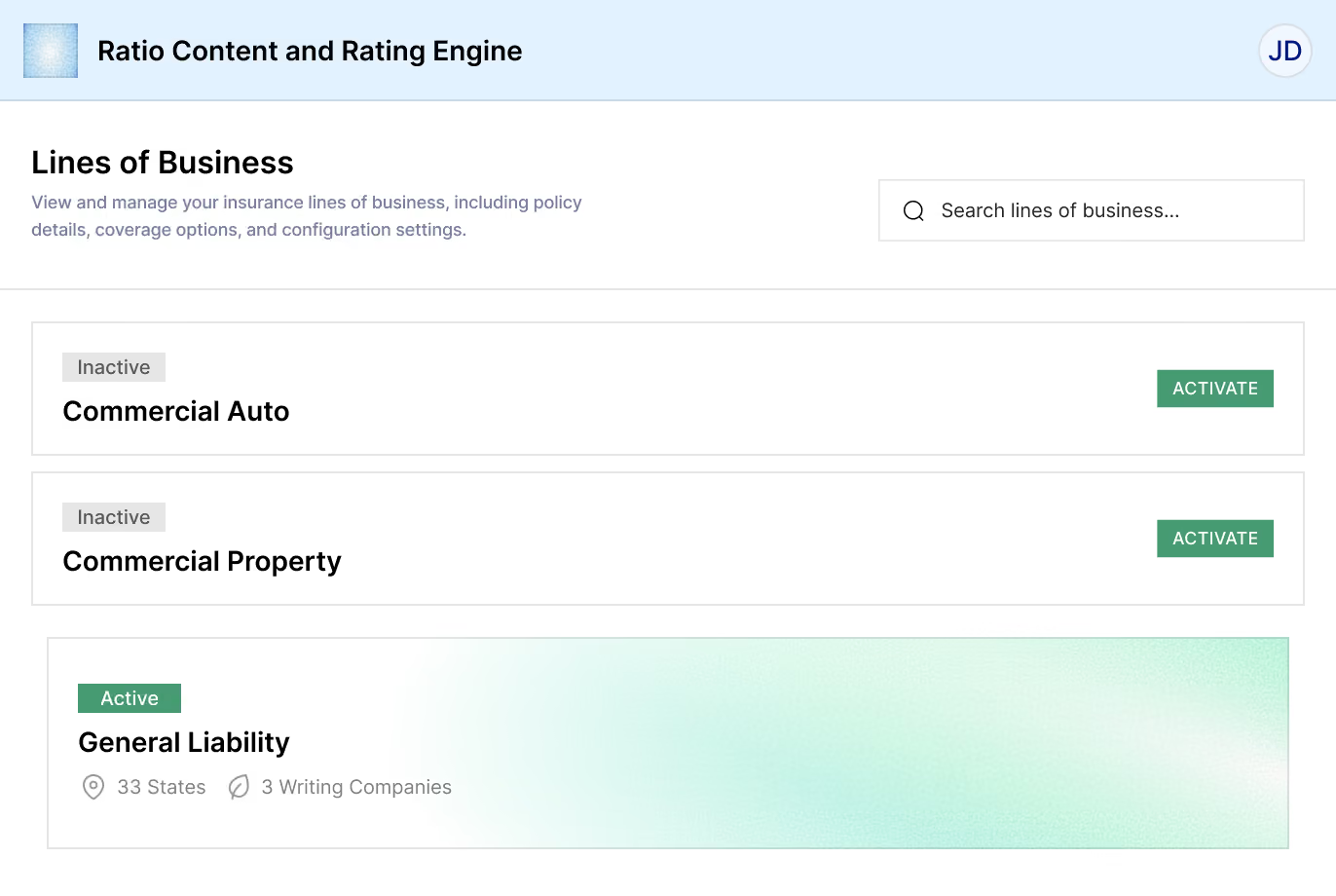


Connect bureau content to your policy system
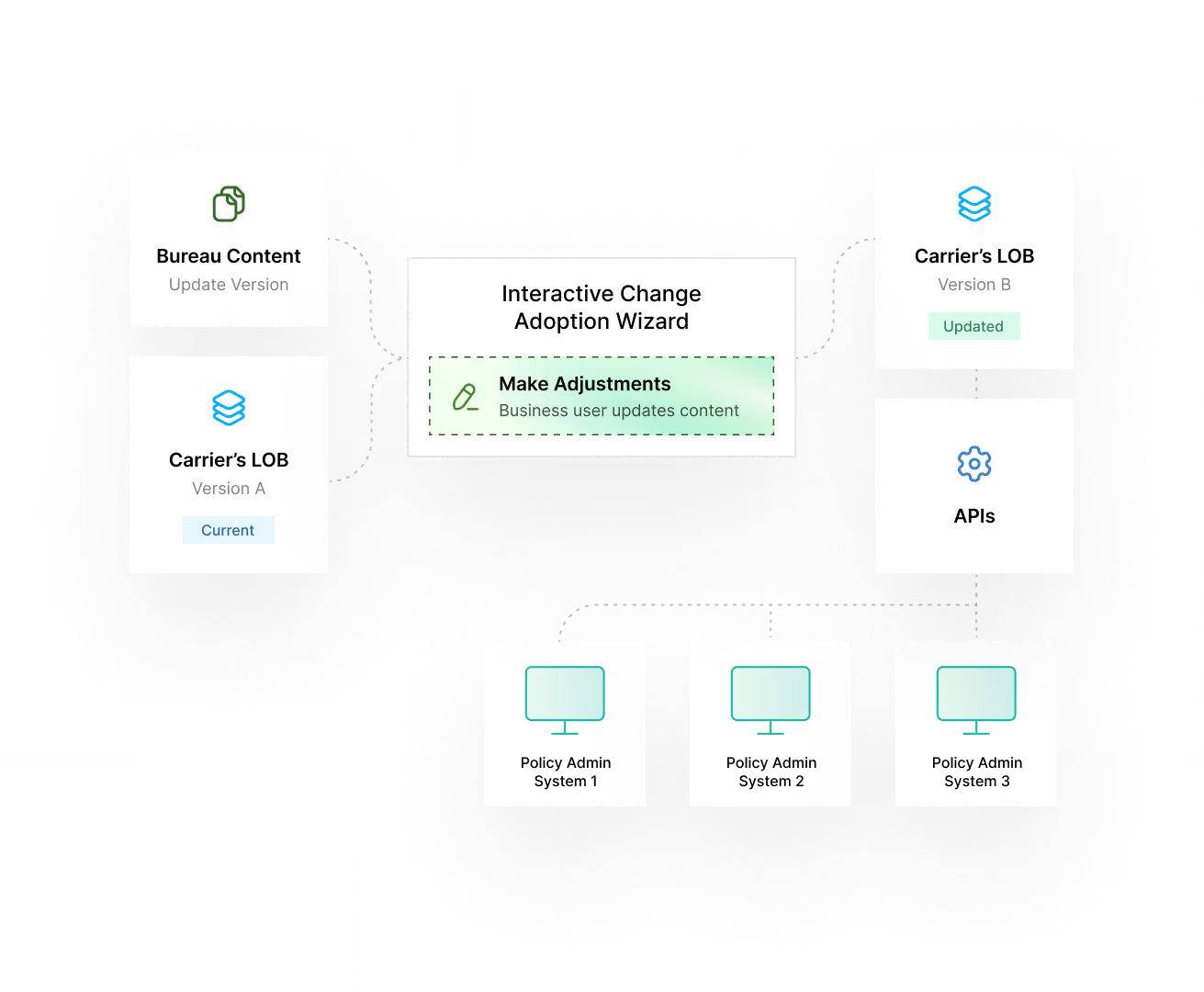
Bureau content should move seamlessly into the system where teams quote and issue business, without requiring manual work or IT development. Ratio Content and Rating Engine ingests licensed machine-readable content, applies carrier-approved logic, and returns production-ready outputs to your policy system through standards-based APIs.
Ingest the content you license
Bring licensed bureau rates, rules, forms, and related machine-readable content into Ratio Content and Rating Engine as it is published
Turn updates into working policy logic
Convert content changes into rating calculations, form selection and attachment, and stat-code assignment that your policy systems can use
Connect via APIs without replacing the core
Send quote or policy data to Ratio Content and Rating Engine and return the regulatory outputs your existing policy administration system needs via APIs

Preserve the deviations that make your product unique
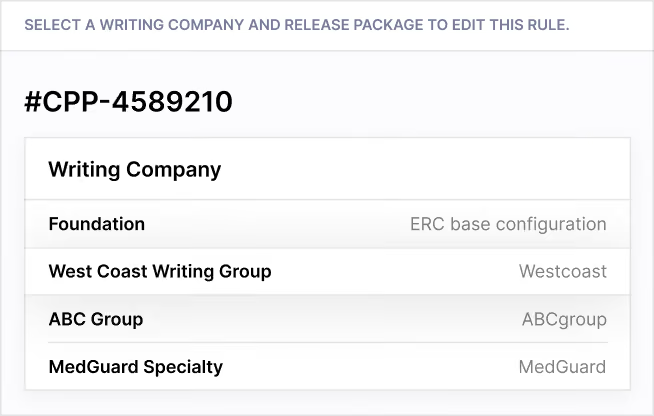
Bureau content is the baseline, not the finished product. Ratio Content and Rating Engine lets carriers layer their own specific coverages, factors, rules, and product decisions alongside the bureau content they modify, with an effective date of their choice and historical reference preserved over time.
Maintain company-specific decisions
Keep carrier-specific decisions on coverages, factors, and product logic connected to the base bureau content instead of managing them as disconnected exceptions
Preserve the history behind every deviation
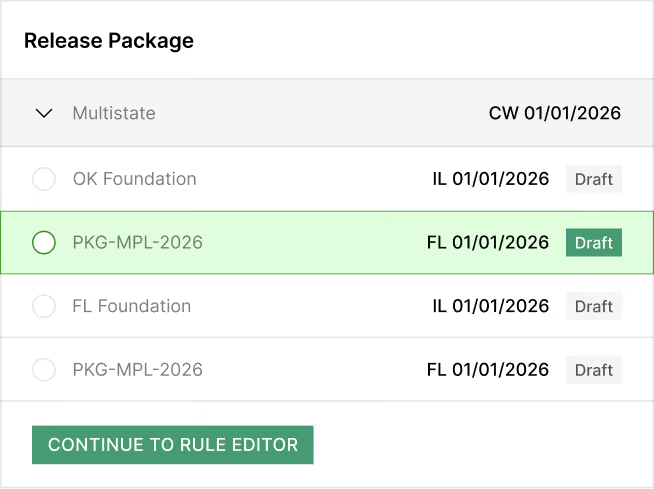
Maintain historical reference through product versions and stages so you can understand what changed, when it changed, and how carrier decisions related to the base bureau content
Apply approved logic consistently
Deliver the same governed product logic across every policy administration system that uses Ratio Content and Rating Engine rather than replicating it manually and risking errors
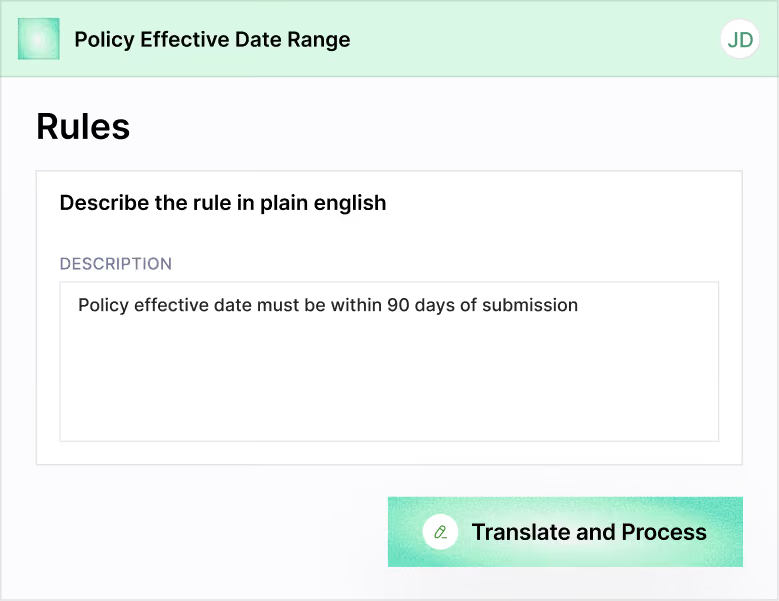

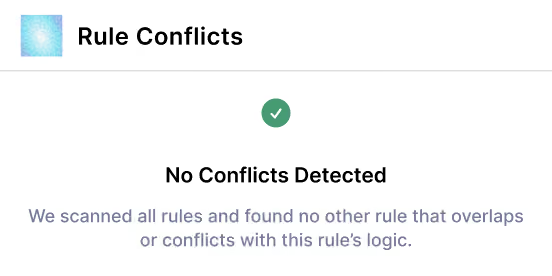

Rate small and large, complex commercial policies on one high-performance engine
Ratio Content and Rating Engine is built for the range of commercial business carriers actually write. It handles large policies with thousands of scheduled items with the same speed and performance it uses for high-volume small commercial general liability and BOP policies, so carriers can quote and win regardless of how complex the policy is, all on one engine.


Deliver fast small commercial quotes
Return general liability and BOP rating responses in as little as 30 milliseconds so you can deliver quote options quickly while applying governed rating logic consistently
Rate large, complex policies just as fast
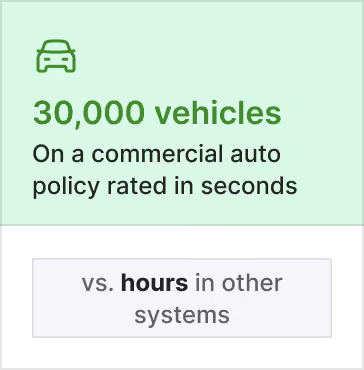
Rate up to 30,000 vehicles in a single commercial auto policy in seconds, while other rating engines take hours
Use one rating foundation across your commercial book
Apply the same governed content and rating capability across any commercial lines you write, regardless of the size and complexity

Create economies of scale across every policy system you use
One connection layer creates more leverage as your policy administration footprint grows. Maintain and govern content once, then reuse the work across each policy system that needs it.
Maintain content and logic once and implement changes faster
Interpret, configure, and manage bureau changes in one place instead of repeating the same work for every policy system
Reuse the connection layer
Deliver current regulatory content and logic to more than one policy administration system through standards-based APIs
Add systems without adding the same work
Extend the value of each regulatory update as you grow, acquire new books, or operate additional policy platforms

More features
Everything you need to move machine-readable bureau content from publication to usable policy-system logic.

Source-agnostic regulatory content architecture
Ingestion and normalization of machine-readable bureau content
Support for ISO ERC, NCCI and other bureau content, subject to applicable licensing
Carrier-specific deviation management with historical reference
Rating calculations, form selection and attachment, and stat-code assignment
Standards-based API integration with any policy administration system
Multistate and package-policy support
AI-native architecture built on Insurity’s regulatory content expertise
Resources





Book a demo
Ready to see Ratio Content and Rating Engine in action? Step inside the solution with a demo tailored to your business priorities.